Weeks after India placed the 1960 Indus Waters Treaty (IWT) in abeyance following the April 22 Pahalgam terror attack, Pakistan has signalled its willingness to discuss New Delhi's long-standing concerns about the treaty, sources said.

External Affairs Ministry spokesperson Arindam Bagchi said the OIC's action at the behest of a "serial violater of human rights and an unrepentant promoter of cross border terrorism" makes its action even more questionable.

In his opening remarks at the virtual summit of the Shanghai Cooperation Organisation (SCO), Modi also said that some countries use cross-border terrorism as an instrument of their policy and the grouping must not hesitate to criticise them.

The MEA said that Pakistan had been stonewalling India's requests for a government-to-government negotiation over the treaty due to changes in the ground situation since it was signed.

A statement issued by the parliamentary affairs ministry earlier on Saturday said the all-party delegations will project India's national consensus and resolute approach to combating terrorism in all forms and manifestations.

'Islamabad feels it has no alternative, but to address the challenges from the Afghan-Taliban through an open war.'
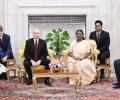
Russian President Vladimir Putin attended dinner hosted in his honour by President Droupadi Murmu at Rashtrapati Bhavan on Friday evening.
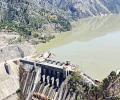
India rejects this so-called "supplemental award", the ministry of external affairs said, referring to the ruling in the case related to Pakistan's objections to Kishenganga and Ratle hydropower projects.

It will be for the first time in nearly nine years India's external affairs minister will travel to Pakistan even as the ties between the two neighbours remained frosty over the Kashmir issue and cross-border terrorism emanating from Pakistan.


Since May 10, when Trump announced on social media that India and Pakistan had agreed to a "full and immediate" ceasefire after a "long night" of talks mediated by Washington, he has repeated his claim over 60 times that he "helped settle" the tensions between the two neighbours.
While there has been some decrease in cross-border terrorism, the US is still concerned about it, the state department said.

The Indian government has revoked 14 categories of visas for Pakistani nationals, including business, conference, visitor, and pilgrim visas, following the terror attack in Pahalgam, Jammu and Kashmir. The decision was made after a Cabinet Committee on Security meeting, and the Home Minister has instructed state governments to ensure that all Pakistani nationals leave India by the set deadlines. The order does not apply to Long Term Visas (LTVs) and diplomatic and official visas issued to Pakistani nationals.

Israeli Prime Minister Benjamin Netanyahu says the foundation of India-US relationship is "very solid" and both sides should find common ground to resolve the tariff issue. He also highlighted the strong defense cooperation between India and Israel.

India strongly responded to Pakistan's remarks on Jammu and Kashmir and the Indus Waters Treaty at the UN Security Council, accusing Pakistan of supporting terrorism and violating the spirit of the Indus Waters Treaty.
shiv Shankar Menon said India had a very meaningful relationship with the US on counter terrorism.
An Army Junior Commissioned Officer (JCO) was killed in an encounter with terrorists along the Line of Control (LoC) in the Akhnoor sector of Jammu and Kashmir. The terrorists' infiltration attempt was thwarted, but the JCO succumbed to injuries sustained during the encounter. This incident comes after a recent brigade commander-level flag meeting between India and Pakistan to discuss border management, highlighting the ongoing security challenges in the region.
Following the deadly Pahalgam attack, Michael Rubin, a former Pentagon official and senior fellow at the American Enterprise Institute, issued a strong statement and said that 'it is now the duty of India to do to Pakistan and to Pakistan's Inter-Services Intelligence (ISI) what Israel did to Hamas', calling for decisive action against Pakistan's intelligence agency for its alleged role in supporting terrorism.
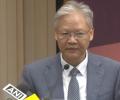
Chinese envoy Xu Feihong stated that China opposes the US imposing tariffs on India, amidst a thaw in Sino-India relations and concerns over global trade disruptions.

Enforcement agencies have highlighted risks related to money laundering and terror financing, prompting closer scrutiny of crypto platforms operating in India.

John Spencer, the chair of Urban Warfare Studies at US-based think-tank Modern War Institute, said India showcased its ability to strike any target in Pakistan "at will" and drew and enforced a "new red line" for cross-border terrorism under the operation that was launched early on May 7.

Chief of Defence Staff Gen Anil Chauhan identifies China border dispute as India's biggest national security challenge, followed by Pakistan's proxy war. He also highlighted regional instability, future warfare scenarios, and dealing with nuclear-armed adversaries as major concerns.
President A P J Abdul Kalam on Monday said people must unite to root out cross-border terrorism, which was a hurdle for economic prosperity and development of the country.

India's Foreign Secretary Vikram Misri said on Thursday that the choice of de-escalation is with Pakistan, as India only responded to the April 22 Pahalgam terror attack, which killed 26 people. He added that Pakistan has been escalating the situation with cross-border terrorism against India for decades.
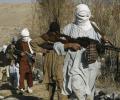
India said perhaps the Permanent Representative of Pakistan is "not aware that Osama bin Laden was hiding in their own country in plain sight, and it is the US forces which got him inside Pakistan. Nor have they heard their Prime Minister refer to Osama bin Laden as a martyr."
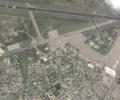
The Pakistani government has once again found itself embarrassed on the world stage, now acknowledging the impact of India's strategic and precision strikes on its military installation during the escalation in May, following Operation Sindoor, which came in retaliation for the April 22 Pahalgam terror attack that killed 26 civilians.

Interacting with reporters in Kolkata, the Trinamool national general secretary reiterated that his party stood with the government in matters of national interest, combating cross-border terrorism, and safeguarding sovereignty.

Since May 10, when Trump announced on social media that India and Pakistan had agreed to a "full and immediate" ceasefire after a "long night" of talks mediated by Washington, he has repeated his claim over 70 times that he ended the conflict between India and Pakistan.
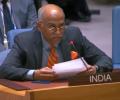
India's Permanent Representative to the UN, Ambassador Parvathaneni Harish, has sharply criticized Pakistan, calling it the "global epicenter of terrorism" and accusing it of providing state support to cross-border terrorism. Harish's remarks came in response to Pakistan's Deputy Prime Minister and Minister of Foreign Affairs Mohammed Ishaq Dar's comments on Jammu and Kashmir during a UN Security Council meeting. India highlighted that Pakistan harbors over 20 UN-listed terrorist entities and has a history of supporting groups like Jaish-e-Mohammed and Harkat Ul Mujahidin. India also emphasized that Jammu and Kashmir is an integral part of India and that Pakistan's misinformation campaign does not change the reality on the ground.
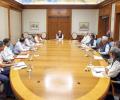
The Cabinet Committee on Security (CCS) met on Wednesday under the chairmanship of Prime Minister Narendra Modi and firmed up the responses to the terror attack.
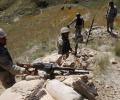
Pakistan and Afghanistan have agreed to an immediate ceasefire and setting up of 'mechanisms' to ensure lasting peace after days of violent clashes along the border that left several soldiers, civilians, and terrorists dead on both sides, officials said on Sunday.

Indian Army's Director General Military Operations Lt Gen Rajiv Ghai claims Pakistan lost over 100 military personnel along the Line of Control during Operation Sindoor and at least 12 aircraft during the conflict in May.

Pakistan declared an 'open war' with Afghanistan following airstrikes targeting Taliban fighters in response to alleged cross-border attacks. The situation has drawn international concern, with calls for de-escalation and diplomatic resolution.

The exchange of the list took place under the provisions of an agreement on the prohibition of attack against nuclear installations and facilities, the ministry of external affairs said.
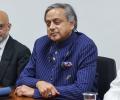
The problem in holding talks with Pakistan is not the language but finding a common vision for decency and peace, Congress MP Shashi Tharoor said on Tuesday, stressing that New Delhi can engage in dialogue with Islamabad if it takes significant action against the infrastructure of terrorism that is visible everywhere in the country.

Over 100 terrorists, including high-value targets such as Yusuf Azhar, Abdul Malik Rauf and Mudasir Ahmed, were eliminated during Operation Sindoor on May 7, the Indian military said on Sunday.
The UN Security Council could meet soon to discuss the situation between India and Pakistan, with the UNSC President expressing concern over rising tensions between the nuclear-armed neighbors. The President, Ambassador Evangelos Sekeris of Greece, said a meeting would provide an opportunity to express views and help diffuse tensions. Sekeris also condemned terrorism in all its forms, including the recent attack in Pahalgam, and called for de-escalation and dialogue between India and Pakistan.

'Terrorism and sports can't go along and Pakistan should understand that'
